
Sensor-enabled surgical guidance
FlexDetect captures real-time mechanical signals from the implantable device, and Sixth Sense Surgical turns that into real-time event detection and guidance to aid during delicate procedures, starting with cochlear implantation.
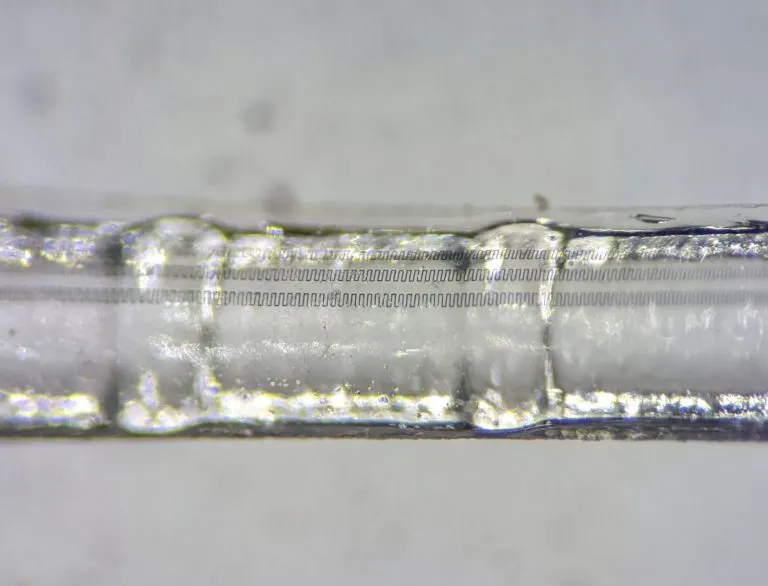
Meet FlexDetect.
FlexDetect is a microfabricated thin film, 10× thinner than a human hair, integrated with the cochlear implant electrode array. It is made of biocompatible materials already used in cochlear implants: silicone, Parylene C, platinum and gold. Capacitive sensing elements spaced along the array capture the real-time strain distribution as it traverses the cochlea.
A sensor on the array must not change how the array bends. In three-point bend testing FlexDetect adds 7.2 nN·m² of bending stiffness, under 3% of commercial electrode arrays.
Advanced Optronics holds an exclusive, perpetual, worldwide license to the underlying Carnegie Mellon University research, developed with support from UPMC Enterprises.
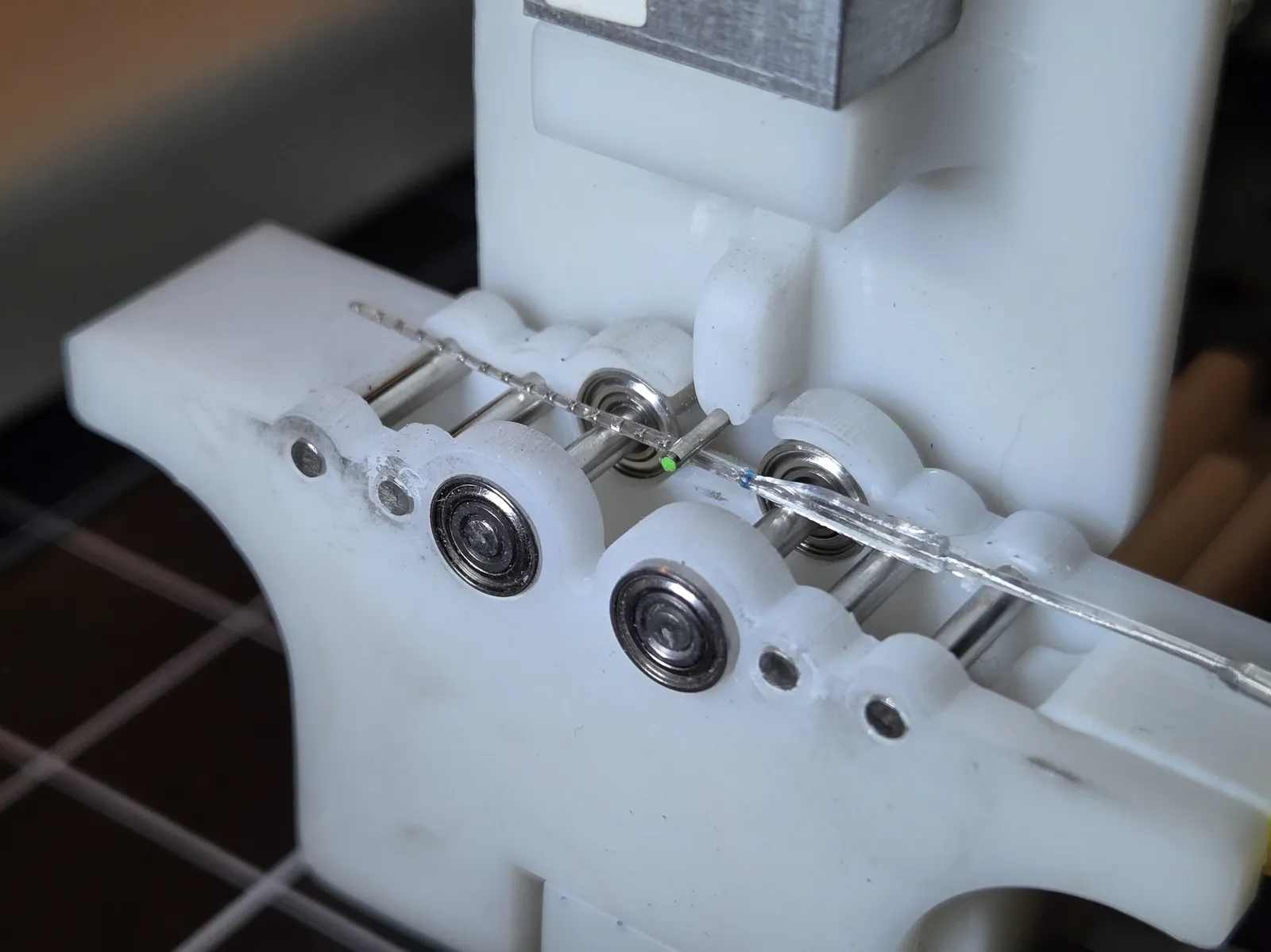
Meet Sixth Sense Surgical.
Sixth Sense Surgical reads and interprets sensor data in real time from readout electronics outside the surgical field, so no active electronics stay implanted. An audible alert sounds when the insertion force crosses an alert threshold.
3D reconstruction
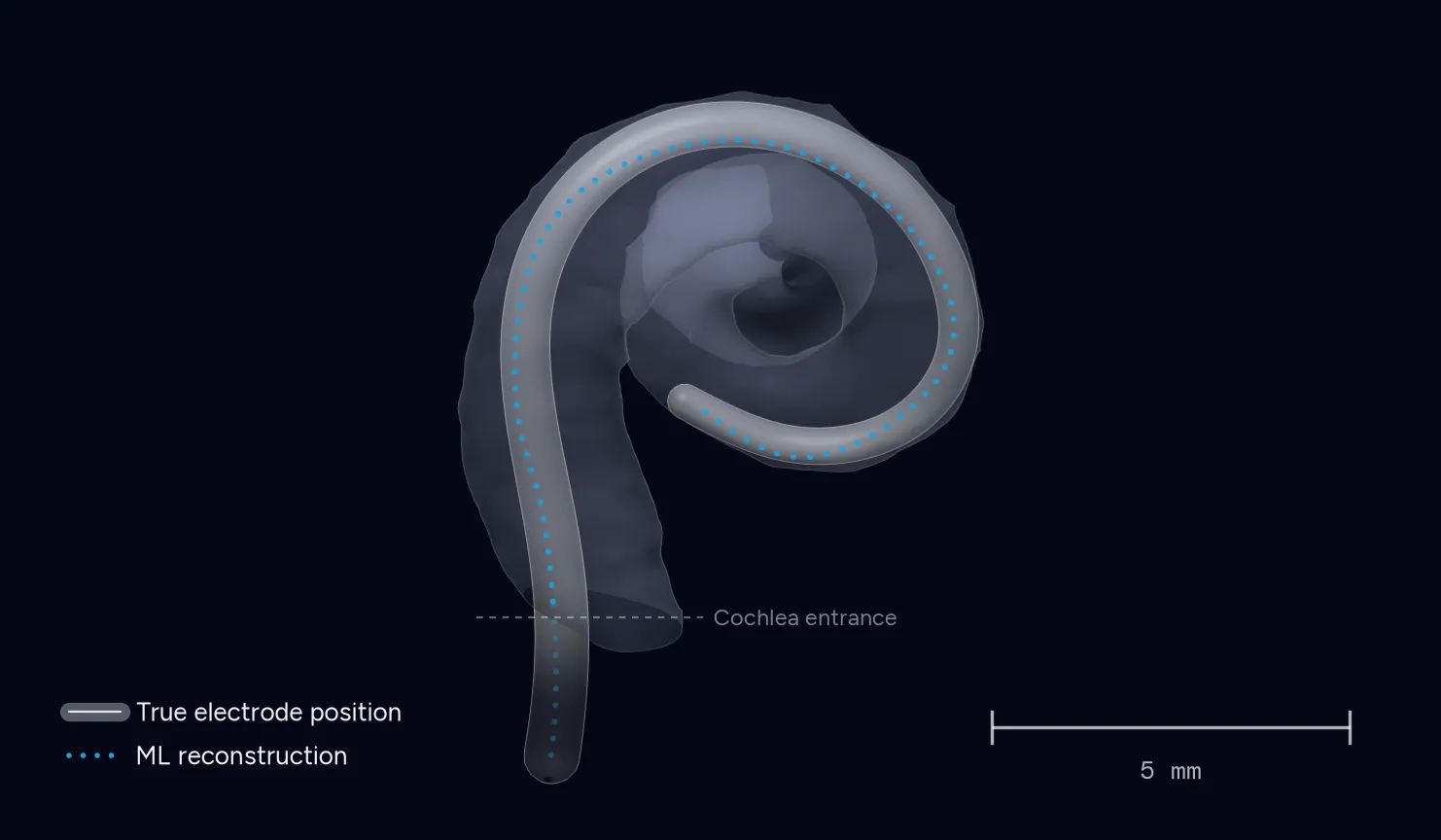
A machine-learning model reconstructs a digital twin of the electrode array’s shape and position inside the cochlea, without imaging. In finite-element simulation the reconstruction accuracy is 0.28 mm.
Surgical technique improves with guidance.
Greater than 75 percent
Reduction in excess impulse with real-time alerts
In a usability study in 3D-printed cochlea models, audible alerts from the Sixth Sense Surgical prototype reduced excess impulse: the magnitude and duration of the force above the 50 mN alert threshold. This effect held among practicing cochlear implant surgeons and trainees (residents and a fellow).
Rapid skill acquisition
Guided insertions with real-time alerts from Sixth Sense Surgical taught atraumatic surgical technique. Assisted insertions (blue) led to dramatically reduced insertion force compared to unassisted insertions (purple). Benefits persisted in subsequent insertions, even once guidance was removed.
Pre-clinical data; not derived from human clinical use.
Cochlear implant surgery first.
The same thin-film approach extends to other flexible instruments: catheters, endoscopes and electrodes.